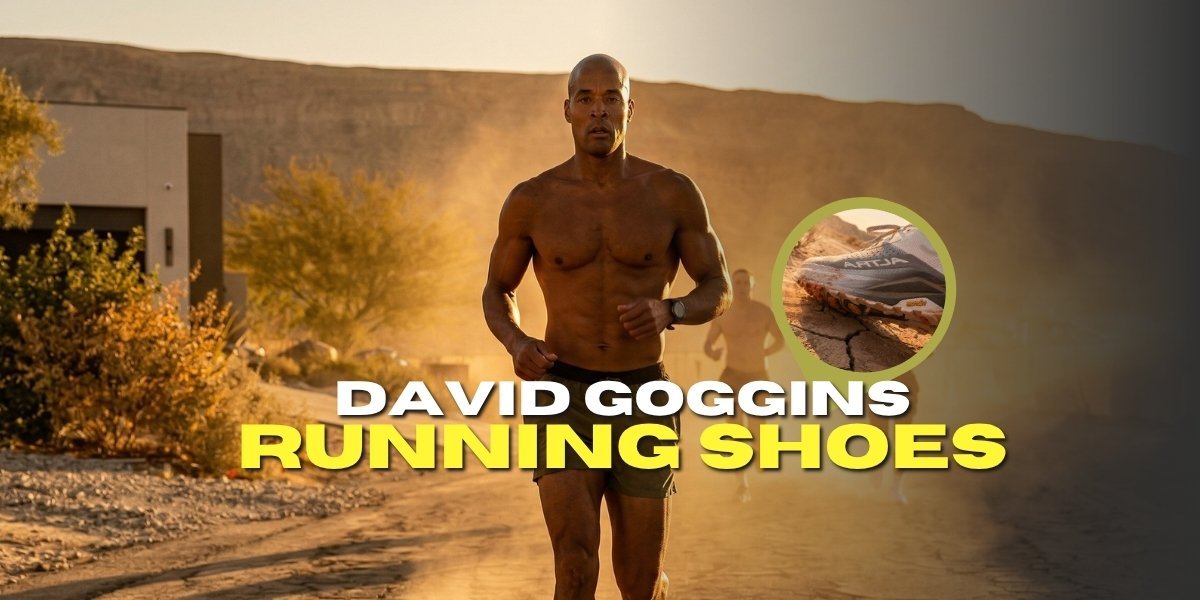
David Goggins doesn’t rely on just one pair of running shoes; he uses a precise rotation to survive hundreds of miles of physical torture.
Are you still searching for that single, magical “perfect” shoe to handle everything from a quick 5k to a grueling 100-miler? Do you wonder how the “toughest man alive” protects his joints from extreme wear and tear during 200-mile races like the Moab 240?
Finding the right gear for extreme endurance is complex. In this post, we break down the exact David Goggins running shoes rotation. We will show you why he selects highly-cushioned Hokas, stable Brooks, and rugged Altras for different types of suffering—and how you can optimize your own gear selection to master any terrain.
The “Anti-Barefoot” Approach: Why Goggins Needs Maximum Cushioning
Some fitness experts love barefoot shoes. They say thin shoes build foot strength. But David Goggins does the exact opposite.
Goggins runs hundreds of miles on very hard ground. All that pounding puts extreme stress on your bones. Because of this, he needs shoes with very thick foam. He needs maximum cushioning to protect his joints from breaking down.
During a podcast with Joe Rogan, Goggins shared a secret. He said his body was once so broken that he needed the thickest street shoes just to keep moving. Joe Rogan loves using thin barefoot Vibram shoes for his runs to build foot strength. But Goggins relies on thick, heavy foams to survive his crazy miles.
1. The Ultra-Marathon Joint Savers: Hoka One One (Bondi & Mach)
When running over 100 miles, shock absorption is key. Goggins loves Hoka shoes because they have extreme foam cushioning. He uses the Hoka Bondi series to protect his joints from heavy impacts. For faster, high-intensity workouts, he switches to the lightweight Hoka Mach series.

Click Here to Grab the Hoka Mach 6
Click Here to Grab the Hoka Bondi 9
2. The Daily Grinders & Recovery: Brooks (Addiction & Glycerin)
For base building and recovery miles, Goggins needs maximum stability. On the Joe Rogan podcast, Goggins admitted a crazy fact. For a long time, the Brooks Addiction was the only shoe his broken body could handle. He even wore these street shoes on rough trails. He also uses the Brooks Glycerin for its soft cushioning during long training runs.

Click Here to Grab BROOKS ADDICTION
3. The High-Speed Tempo Trainers: Nike Pegasus Plus or 41
Goggins needs speed for shorter races and fast workouts. These shoes are not as thick as his Hokas. But he values the Nike Pegasus series because they are very light and quick. While he famously wore the Pegasus Turbo, the modern Nike Pegasus Plus and Pegasus 41 give that exact same bounce and energy return on the road
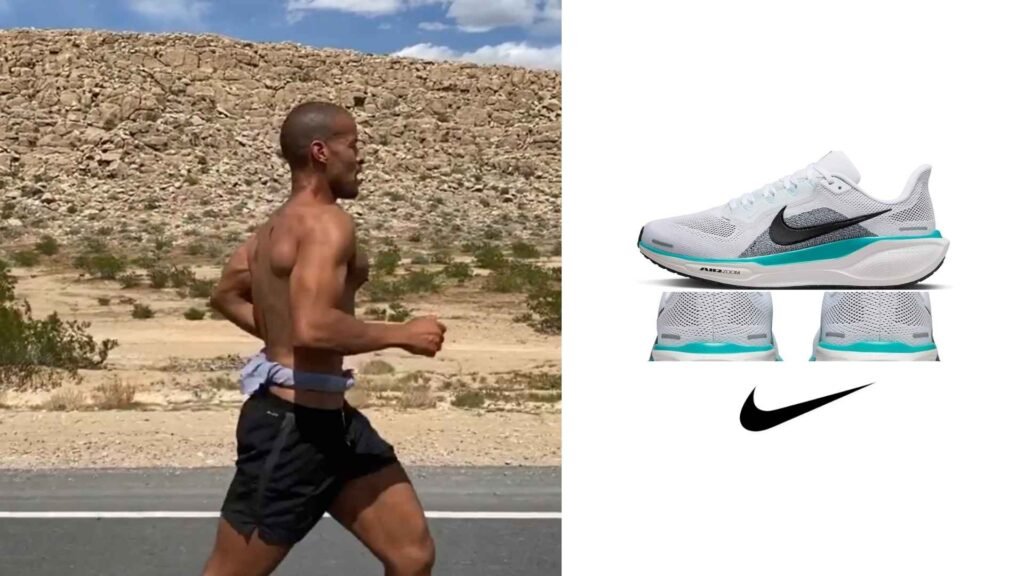
Click Here to Grab The Nike Pegasus Plus
4. The Tactical Trail Tanks: Salomon & Altra
Running on steep mountains is dangerous. When the dirt paths get rough, Goggins swaps his street shoes for tough trail runners. He uses Salomon shoes because they have aggressive rubber grips. But for brutal 200-mile races like the Moab 240, he relies on the Altra Olympus.
This is Altra’s maximum cushion trail shoe. It has the thickest foam they make, which is exactly why Goggins chose it to protect his feet over 240 miles of harsh rocks and dirt. The wide toe box also gives his toes room to spread out and survive the off-road miles.
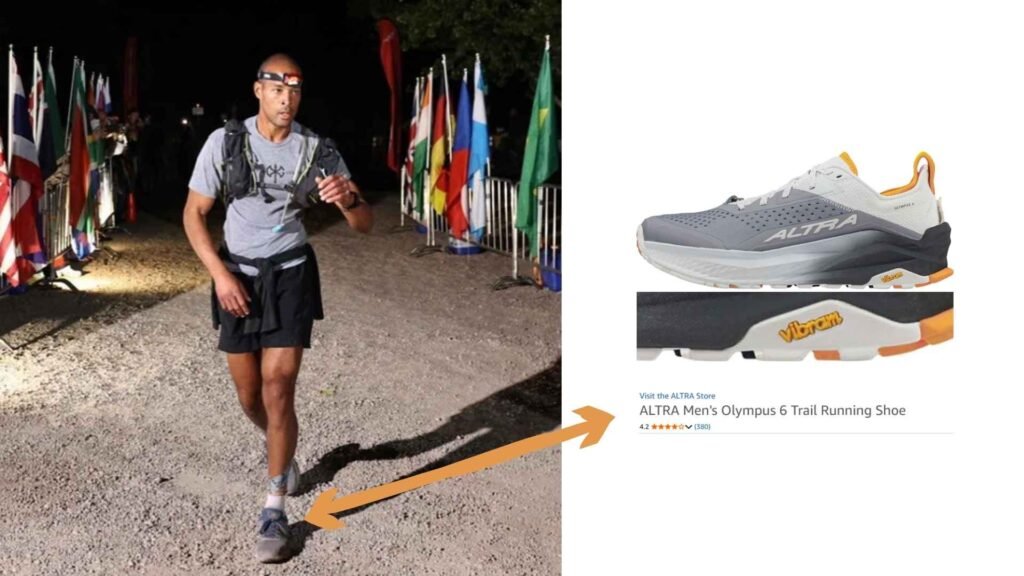
Click Here to get The Olympus 6 Trail Running Shoe.
The Reality Check: Durability and When to Replace Your Shoes
David Goggins burns through running shoes fast. When you run 100 miles at a time, you destroy the foam.
Goggins follows a strict rule for his gear. He does not look at the miles on the shoe. He listens to his body. If his knees or feet start to hurt, he throws the shoes away.
Normal shoes break down fast. Running in dead shoes will hurt your joints and cause injuries. If the foam feels flat, you must replace it. You cannot be cheap when protecting your body. Buying good shoes is the only way to stay safe.
The Final Takeaway on David Goggins Running Shoes
David Goggins does not pick his shoes by accident. Every shoe in his closet has a clear job. He picks his gear to match the dirt, the road, and his body.
Different paths need completely different tools. He respects the distance and protects his joints with the best gear.
Are you currently running in a highly cushioned shoe like a Hoka, or do you prefer a standard daily trainer? Let us know in the comments below!